Building a data-room inventory for a technical review
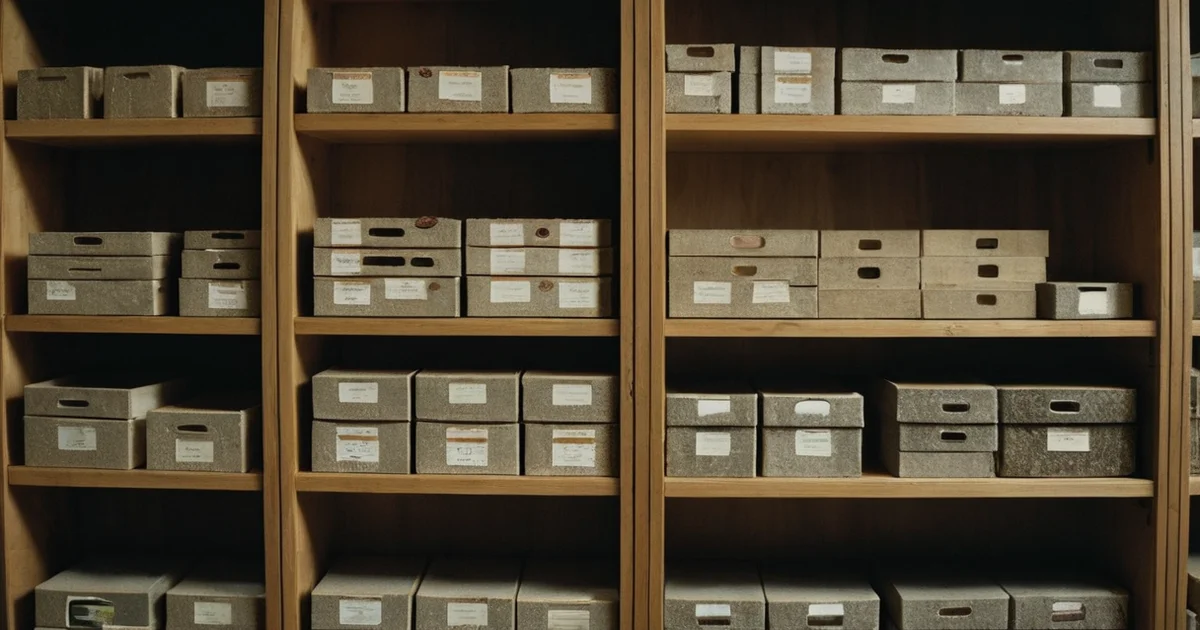
A practical checklist for inventorying a data room before technical review, covering provenance, coverage, gaps and documentation, with source statements kept apart from suggestions.
A data room is easier to review when every item can be found, traced and understood. This checklist sets out one way to build the inventory that sits at the front of a technical review. The source pages are general US Geological Survey (USGS) data management guidance. They are not about exploration data rooms, and the checklist steps below are our own suggestions, not source statements.
What the sources say
Provenance and documentation
The USGS describes metadata as information about data covering who, what, where, when, why and how, so that data can be understood, re-used and integrated with other data. It adds that documentation should be updated as actions such as acquisition, processing and analysis are applied. A data dictionary is described as a way to catalogue the structure and content of data, with meaningful descriptions of named data objects. See Describe (Metadata/Documentation).
Standards and formats
The USGS data standards page explains that parameter-level standards define the format and units of a field, and that mixed date formats across sources create extra conversion work. Where standardising an existing field would lose original detail, it suggests keeping the original field and adding a separate standardised one. See Data Standards.
Quality, gaps and uncertainty
The Manage Quality page defines a data defect as any issue that reduces fitness for use, and gives gaps in data series as one example. It says data from outside sources should be assessed for quality issues before use, and that quality indicators can be stored in separate fields alongside the data rather than only in documentation. See Manage Quality. A companion page lists items worth recording, including results of quality assessments, citations for methods, screening methods, flags, and uncertainty, which it calls especially important for derived and model-based data. See Documenting Data Quality: Considerations.
Suggested inventory checklist (our suggestions)
These steps are an organisational proposal built on the themes above. They are not requirements from any source.
- One row per dataset or file group. Record a stable identifier, title, custodian, how and when it was received, and where the files sit in the room.
- Provenance fields. Borrowing the who, what, where, when, why and how framing, note the original creator, the stated purpose, the collection method if documented, and any later processing with its date.
- Coverage statement. Describe in plain terms what period, area and parameters the dataset says it covers. Record this as a description of the material, not as a finding.
- Structure documentation. Link each dataset to a data dictionary or field list. Note units, date formats, location fields and their stated reference system, and flag where original values were kept beside standardised ones.
- Methods and quality notes. Link to method descriptions, quality checks, flags and uncertainty statements. If none exist, write "not provided" rather than leaving the cell empty.
- Gap register. Keep a separate list of missing, unreadable, undocumented or partial items, each with a status such as requested, unavailable or unknown.
- Formats and versions. List file formats, version labels and any known duplicates, so reviewers know which copy is the reference.
- Inventory log. Record who compiled and who checked each entry, and when, so later changes can be traced.
Keep the inventory separate from conclusions
An inventory records what is in the room and how well it is documented. It should not say whether the data are correct, complete for a purpose, or what they imply. Those questions belong to the review itself. Keeping the two apart also makes the gap register more honest, because a gap is recorded as a fact about the material and not as a judgement about it.
Limitations
This article draws only on four general USGS data management pages. They do not address exploration data rooms, so the checklist is an editorial adaptation. USGS manual requirements quoted on those pages apply to USGS information products, not to Core Element, and nothing here implies USGS endorsement. The article offers no technical validation and no site-specific advice, and it cannot confirm that any dataset is complete or fit for a particular use.
Sources
- Describe (Metadata/Documentation)
- Manage Quality
- Data Standards
- Documenting Data Quality: Considerations
Send an inventory first. Use an agreed secure route for confidential files, coordinates and raw project data. Contact Core Element to discuss your data inventory.