What a cost-per-metre assumption excludes
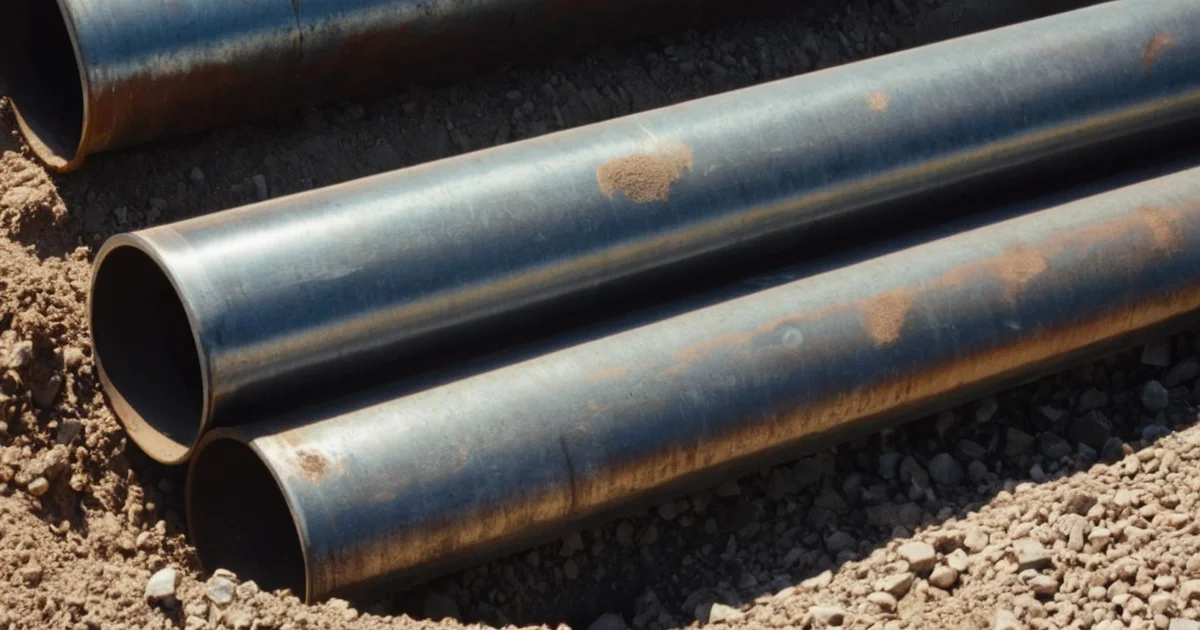
A cost-per-metre figure is a ratio, and what it means depends on where its cost boundary sits. This explainer covers what the numerator can leave out and what to ask before relying on it.
A cost-per-metre figure looks like a single number, but it is a ratio with a hidden boundary. This explainer covers what that boundary can leave out. It uses a published government cost framework as a reference point. None of the cited sources, as reviewed, defines cost per metre for mineral drilling. Definitions and checks below are therefore labelled as the editorial team view unless a source is cited.
What the term means
Editorial team view: cost per metre is the total cost assigned to a drilling programme divided by the metres drilled. It is expressed in a stated currency per metre (currency/m). The denominator is often simpler to check than the numerator, but its unit and what it counts should still be confirmed. The numerator depends on three choices: which costs were included, when cost accumulation started and stopped, and how shared costs were split between programmes.
A documented cost boundary as a reference
Canadian guidance on allowable expenditures for petroleum exploration licences shows how explicitly such a boundary can be drawn. It records a shift from set activity rates to actual cost for licences issued from 2002. It is a claims framework for a different sector, and the editorial team does not treat it as a standard for mineral drilling. Under that guidance:
- Drilling cost accumulation usually starts at access road and drilling site construction, or at rig movement from staging, whichever comes first. It ends at rig re-stacking or at the end of contractual rig obligations, whichever comes last.
- Where equipment serves more than one operation, the allowable mobilization and demobilization cost is the lesser of the documented actual charge and a reasonable allocation. The guidance gives an operational-days formula, or a similar method, for that allocation. For drilling, operational days run from spud date to rig release.
- Between-season standby is allowable only if an associated operation took place and the cost is documented, reasonable and fairly allocated.
- Administrative personnel, program management, office overhead and data interpretation are not allowable expenditures. Indirect expenses such as depreciation and (accounting) reserves, interest and return on investment are also not eligible.
- Land use and access fees, surface lease rentals and regulatory application and process costs are not eligible at cost. They are recognised indirectly through a miscellaneous allowance of 10% of direct allowable expenditures. That allowance covers miscellaneous costs including, but not limited to, overhead, and it also offsets multi-season regional staging areas.
The guidance says the approach is not intended to cover every cost an explorer incurs, but rather a high percentage that can act as "a close proxy for the full cost". In this framework, an item that is not eligible at cost is not necessarily left out. Some items are recognised only through the flat allowance.
Why it matters for a decision
Editorial team view: some costs do not scale with metres drilled, such as mobilization, standby, staging, access and approvals. When these are included, they are spread over however many metres were drilled. Two programmes paying the same contracted rate can therefore show very different all-in figures. A contractor rate alone can also understate programme cost if fixed items are recorded elsewhere. Figures can only be compared across programmes, years or contractors when, at a minimum, their boundaries, allocation rules and currency basis match.
How it can be misread
Editorial team view: the editorial team suggests checking for the following possible misreadings. They are not drawn from the cited sources.
- Treating a quoted drilling rate as the full programme cost.
- Comparing figures where one includes mobilization or standby and the other does not.
- Reading a low cost per metre as a sign of deposit value.
USGS describes reserves as only those resources that can be economically recovered under current market conditions. Editorial team view: a drilling cost ratio does not, on its own, address that economic test.
Questions to ask before relying on it
USGS data management guidance says data from outside sources should be assessed for quality before use. It also says parameter-level standards define the format and units of a field. The questions below are the editorial team's suggestions, not USGS requirements.
- What currency, tax basis and unit are used: metres drilled, or another measure?
- When did cost accumulation start and stop?
- Are mobilization, demobilization and standby included, and how were shared costs allocated?
- Are access, approvals, staging, supervision, interpretation and financing in or out, and are any of them covered only by a flat allowance?
- Is the figure an actual cost, a budget or a contracted rate?
- Is the boundary documented next to the figure so that someone else can reproduce it?
Limitations
The main cost source is Canadian petroleum licence guidance, not a mineral drilling standard, and the sections of it reviewed here do not mention cost per metre. The cited sources, as reviewed, give no typical cost-per-metre values, ranges or ratios, so this article gives none. The checklist describes reasoning only. It is not advice on any programme, contract or purchase, and qualified professionals should check how it applies in each case.
Sources
- Guidance Notes on Claiming Allowable Expenditures
- From Maybe to Mineable: terms to describe mineral resources and reserves
- Manage Quality
- Data Standards
Send an inventory first. Use an agreed secure route for confidential files, coordinates and raw project data. Contact Core Element to discuss your data inventory.