What an untested target means
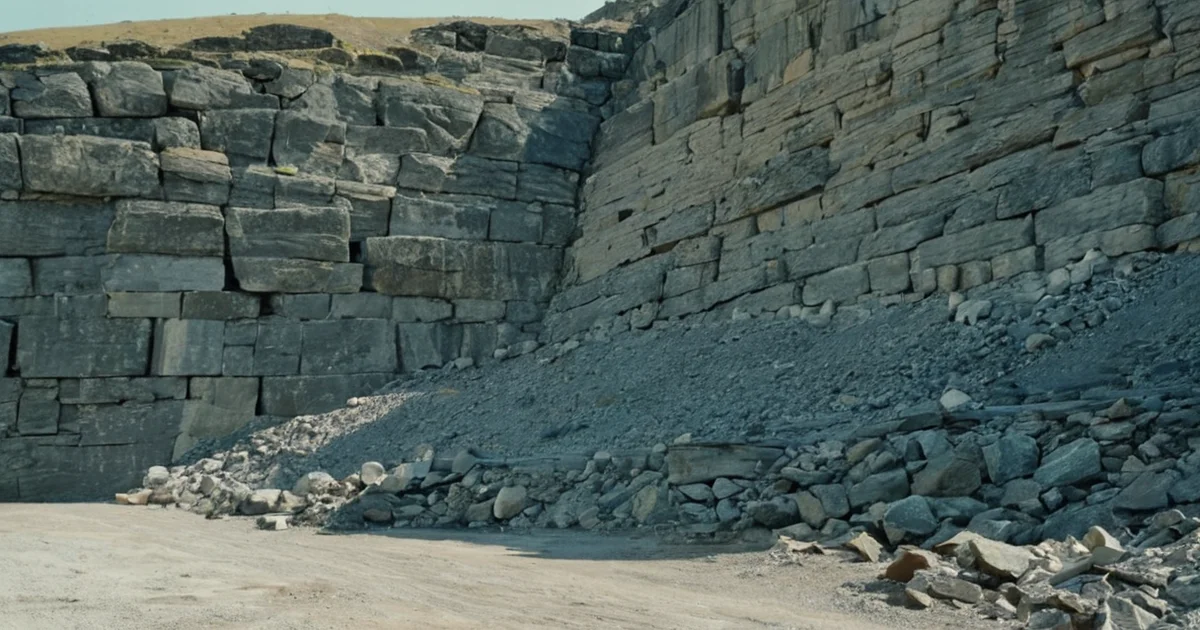
A technical explainer on untested exploration targets: how they relate to the USGS evidence scale (an editorial mapping), why the label matters, common misreadings and questions to ask.
What the term means
In this explainer, an untested target is a defined area where a mineral deposit is hypothesised, but where that hypothesis has not yet been tested by direct geologic evidence such as drilling (the USGS example), although surface data may already exist. The phrase is working vocabulary in exploration. None of the USGS sources cited here defines it as a category, so this definition is the editorial team's view.
The closest source framework is the USGS scale for describing the strength of evidence for mineable minerals. At the end with less information and higher uncertainty are undiscovered resources. These are expected to exist because of what is known about local geology and how minerals form. Identified resources are verified using direct geologic evidence, and USGS gives drilling into the deposit as an example. If the deposit has favourable physical and chemical properties, more data collection and drilling can then support higher-confidence estimates of location, quality and quantity. Reserves are narrower still: only resources that can be economically recovered under current market conditions (USGS, From Maybe to Mineable).
Editorial team view: on that scale, an untested target belongs with expectation, not verification. It has no resource classification of its own; any tonnage or grade attached to it is conceptual, not a resource estimate.
Why it matters for a decision
In the USGS framing, expectation rests on knowledge of local geology and how minerals form (USGS, From Maybe to Mineable). Editorial team view: the expectation behind an untested target rests on the same kind of reasoning. USGS deposit models compile the geologic, geochemical and geophysical characteristics of deposit types. They list attributes intended as guides for resource studies and mineral exploration. The model types include descriptive, grade-tonnage, geoenvironmental and geophysical (USGS mineral deposit models).
A three-part mineral resource assessment predicts, for a specified geographic region, both the number of undiscovered deposits and the amount of resources in them. These predictions are based on probability calculations. USGS notes that several assumptions strongly affect these predictions and that the assumptions must be checked during an assessment. Its evaluation of the new software implementation also produced findings on the sensitivity of the calculation results to the input (USGS, Techniques and Methods 7-C15). Global assessments delineate permissive tracts and estimate probable amounts of undiscovered resources (USGS Global Mineral Resource Assessments).
Editorial team view: a decision on an untested target is a decision made under the uncertainty these sources describe. The label tells the reader that the evidence is still at the expectation stage.
How it is commonly misread
The following are editorial team observations, built on the source definitions above.
- Treating a target as a resource. USGS ties verification to direct geologic evidence. A target that lacks it has not been verified.
- Treating a regional prediction as a site-specific one. Three-part assessments make predictions for a specified region. On their own, they do not show that a deposit exists at a particular target.
- Treating a model match as proof. Deposit model attributes are guides. If a target matches a model, that match is the hypothesis being tested, not the answer.
- Reading "untested" as a value judgement. The word describes how far the evidence has got. It says nothing about the outcome.
Questions to ask before relying on it
This checklist is the editorial team's suggestion. It is not a source requirement.
- What defines the target? Does any of that evidence directly sample the target, or is all of it inferred?
- Which deposit model is assumed? Which of its attributes were observed, and which were assumed?
- If a permissive tract or regional assessment is cited, at what scale was it made, and which assumptions drive it?
- How sensitive is the case for the target to changes in its inputs?
- What result would move the target from expectation to verification, and what result would weaken the hypothesis? This question is an editorial extension of the USGS reference to direct geologic evidence. USGS does not set it as a criterion for testing a target. Editorial team caveat: a positive test may confirm mineralisation, but it does not by itself establish a resource. USGS notes that more data collection and drilling can then provide higher-confidence estimates of location, quality and quantity.
- Do the documents keep the terms target, resource and reserve separate?
Limitations
The sources are public USGS pages on resource terminology, assessment methodology and deposit models. None of them defines "untested target" or sets criteria for testing one. The definitions on the infographic are attributed to USGS Circular 831 (1976). This article does not cover reporting codes used for public disclosure. It is not advice on any project, deposit or purchase, and it does not imply USGS endorsement.
Sources
- From Maybe to Mineable: terms to describe mineral resources and reserves
- Probability calculations for three-part mineral resource assessments
- Global Mineral Resource Assessments
- USGS mineral deposit models
Send an inventory first. Use an agreed secure route for confidential files, coordinates and raw project data. Contact Core Element to discuss your data inventory.